The all-new iPhones and Apple Watch can be easily avoided but there’s no escaping iOS 8
The Apple Watch: only an unhealithily devoted Apple fanatic could bear to wear one.
The past few weeks haven’t been great for Apple. First they were implicated in the stolen celebrity nude photo disaster, which reminded everybody how easily clouds leak. Correct me if I’m wrong, but I don’t think the iPhone is generally marketed as a diabolical timewasting device with the potential to wreak a grotesque and devastating invasion of your personal privacy. They tend to focus more on all the cool colours it comes in.
Then they launched the horrible-looking Apple Watch, which does everything an iPhone can do, but more expensively and pointlessly, and on a slightly different part of your body. Only an unhealthily devoted Apple fanatic could bear to wear a Apple Watch, and even that poor notional idiot would have to keep putting their iPhone down in order to operate the damn thing. It’ll scarcely be used for telling the time, just as the iPhone is scarcely used for making calls. It’s not a watch. It’s a gaudy wristband aimed at raising awareness of Chinese factory conditions. Or a handy visual tag that helps con artists instantly identify gullible rich idiots in a crowd.
Apple also unveiled the all-new bigger iPhone 6, and the all-new even bigger-than-that iPhone 6 Plus, which is the size of the Isle of Man and aimed at people who literally have deep pockets. By releasing two differently sized rectangles, which in turn differ from its previous range of differently sized rectangles, Apple has selfishly exhausted the global supply of differently sized rectangles. From now on, all rectangles, no matter what context they appear in, will have to be the same size. Wars will be fought to decide which dimension becomes the standard. And when mankind finally settles on a compromise, Apple is going to start on ovals.
As part of the iPhone 6 publicity blitz, Tim Cook also announced every iTunes user in the world would be getting U2’s new album free of charge. It was downloaded automatically on to millions of users’ phones, like a sinister virus. Music is meant to be catchy – but not until you’ve heard it. The album, which I haven’t listened to yet, is terrible: even worse than their last one, which I didn’t listen to either. I don’t want to listen to any U2 albums in case I discover I like them, and have to violently reassess my own self-image. For the past five years, it’s been delightfully easy to ignore U2. Then Apple comes along and slings them under your nose like a bowl of bum soup you didn’t order. What do we have to do? Start lobbying Google for U2’s right to be forgotten?
Still: new watches, new rectangles, new music – these needn’t really affect you if you don’t want them to. But the other new development – the launch of iOS 8 – is impossible for iPhone users to ignore. It’s curious that we, the users, are supposed to look as if we are eagerly anticipating these operating system updates – a load of digital dogwork Apple nonchalantly drop into our laps on a regular basis.
Updates are awful. All you want to do is watch TV and rot in your own filth. Instead you spend the evening backing up your phone, downloading a gigantic file and sitting around while your phone undergoes an intense psychological makeover, at the end of which it may or may not function. Often, it takes an hour or more. Fiddly, time-consuming admin – it’s like having to change the water in a fish tank. I can’t be arsed: it’s why I don’t have an aquarium. I’d rather let the fish die.
But if I hold out, gradually nothing will work on my existing phone. They’ll freeze me out by degrees. Cut me out of the club. Plus I’ll miss out on great features such as slightly different icons and a terrifying new form of predictive text that precisely mimics the sensation of talking to an idiot who keeps finishing your sentences for you. (Either my thumbs have grown clumsier, or predictive text in general has grown a lot more aggressive recently. I can’t type anything without it continually popping up to blurt random words on my behalf – it’s like being in the Beastie Boys.)
Part of the problem is that smartphones are so horribly addictive, as moreish as smoking. The difference between smartphones and cigarettes is this: a cigarette robs 10 minutes from your lifespan, but at least has the decency to wait and withdraw all that time in bulk as you near the end of your life – whereas a smartphone steals your time in the present moment, by degrees. Five minutes here. Five minutes there. Then you look up and you’re 85 years old.
That little rectangular screen is so hypnotic, so omnipresent, I feel lost and sick the moment mine’s tied up doing something as uninterruptable as an update. While it sits there, blank, progress bar inching along at a snail’s pace, I glance at it nervously, like an owner watching his dog undergo an operation – not out of anything approaching sympathy, but the selfish concern that if it dies, I might not be able to check my email for five minutes. I suppose if I had an Apple Watch I could at least fiddle mindlessly with that instead while waiting for the phone to spring back into life. Come to think of it, that’s probably the Watch’s sole purpose. They should market it that way. Big winner.
The New York Attorney General has signed agreements with Google and Microsoft to add "kill switches" to Android and Windows Phone devices.
It comes as part of the "Secure our Smartphones" initiative, where the report stresses the importance of kill switch safeguards for mobile phone platforms in order to keep user data safe. With these "kill switches", you'll be able to render your phone useless, remotely, in the event of its theft.
The kill switch issue has been one that's been hotly discussed. For example, in California, the kill switch idea was immediately rejected, but then the state recently approved it this May. This bill states that whenever a new phone is purchased in the state of California, it must be loaded with the kill switch software.
Apple already has a kill switch feature loaded on its iPhones, and the New York City Attorney General cited that there was a 19% decrease in iPhone thefts ever since the feature was implemented; whereas Samsung phones that still didn't carry the feature experienced a 40% increase in robberies.
Now it's unclear as to when the kill switches will be added to the Android and Windows Phone platforms, but when they are, every one of Google and Microsoft's phones will have a kill switch.
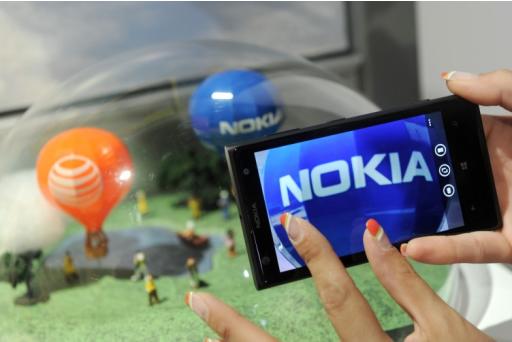
Nokia was forced to pay several million euro to criminals who had threatened to leak the source code that was used in its phones six years ago.
The Finnish police told local TV station MTV that it was investigating the case, which happened in 2008, and that the case was still open.
According to Reuters, the blackmailers had acquired the encryption key for a core part of Nokia’s Symbian software and threatened to make it public.
If this happened, it would have allowed anyone to write additional code for the operating system, including possible malware which would have been indistinguishable from the actual software.
Nokia agreed to deliver the cash to a parking lot for collection, but not before it notified the police about the situation. However, while the money was picked up, the police lost track of the criminals after it happened.
At the time, Symbian’s market share was roughly 50% as the software was used by a number of manufacturers. Nokia later replaced Symbian with Windows Phone in 2011 when it launched its Lumia smartphone range.
Nokia’s mobile phone business was bought by Microsoft earlier this year for €5.4 billion. When the deal was completed, Microsoft said that it would help “accelerate innovation and market adoption for Windows Phones.”
The iPhone 6 on release date this 2014 is likely to prove right most of its rumoured specs and features, headlined by a lightweight and slim build with a 64-bit A8 processing chip plus a killer camera combo.
According to Phone Arena, what largely the iPhone 6 will be has been confirmed by a YouTube clip that was uploaded this week. The online video shared information that allegedly came from a site that is dedicated to everything about the next iPhone, said the same report.
It should be noted, however, that there is no way at the moment to verify the authenticity of the details provided.
2 large-screen iPhones
Regardless, the new report is aligned with the solidifying belief that Apple's sequel to the iPhone 5S will come with two different display panel dimensions - the 4.7-inch model that some blog reports referred to as the iPhone Air and the 5.5-inch edition that supposedly will tussle with the likes of Galaxy Note 4.
Both handsets will sport an identical screen resolution of 1704 x 960 bit with varying pixel density. As expected, the first iPhone phablet will boast of a higher 416 pixels per inch (ppi) while its smaller sibling will debut with 356ppi pixels flooding the screen.
Super-slim iPhone 6
In the same video, the following dimension was provided: 138mm x 67mm x 7mm, which somehow backs earlier suggestions that Apple intends to further shrink the iPhone thickness while making light as a feather.
This plan will be realised with Apple using new mix of materials like Liquidmetal alloy, graphene and sapphire that will make up of the final cut that is the iPhone casing. MacRumors reported that Apple chief designer Jony Ive has largely hinted of 'the new materials' that will be part of the 2014 iPhone release.
A beautiful beast
Underneath its aesthetic appeal, the leaked YouTube clip also claimed that the bevy of iPhone 6 killer features will again be fired up by a 64-bit application processor with A8 chip replacing the A7 that came with the 5S last year.
10MP rear shooter
The most notable part of the report is the likelihood that iPhone buyers will get a significant camera bump up with their iPhone 6 purchases as the main shooter of the device will reportedly be updated from 8MP to 10MP.
Also, the front-facing camera will improve from 1.2MP to 2.1MP, which is a possibility that Mark Gurman of 9to5Mac has recently floated around.
And as a form of bonus, the iPhone 6 on its release date, likely on September 2014, will have a 128GB variant that will sell at $400, the Phone Arena report claimed, even as numerous analyst pegged the device's starting price at $200 for the regular model and $300 for the iOS 8-powered phablet - all presumably with contract agreements.
If you are in the market to buy a smartphone, you will most probably have to select between a Samsung phone and an Apple Phone.
These are the companies who jointly own two thirds of the smartphone market. Samsung’s latest flagship phone, the S5, is in the market. Here, we compare the camera specifications of the S5 with Apple’s iPhone 5S. You can buy the iPhone 5S and the S5 at around $700.
Specs and Resolution
The Galaxy S5 comes with a front camera of 16 MP and has some excellent features. It has a sensor of 1/2.6 inches. The iPhone 5S, on the other hand, comes with a smaller resolution of 8 MP. However, merely by cramming in more number of pixels on a smaller surface, the S5 will not necessarily be able to take better quality images when compared to the iPhone 5S. Samsung’s device offers a real time HDR function. This enables the user to have a preview of the results before shooting a picture. The S5 camera also comes with the latest ISOCELL technology. This brings down the crop factor of the image and also enhances the dynamic range. It achieves this by preventing the leakage of light from pixel to pixel. The S5 is able to shoot at a resolution of 4640 x 3480p for stills. It can also take video records at a resolution of 1080p at the rate of 60 frames per second. The camera also records ‘4K Ultra HD’ video with a resolution of 3840 x 2160p 30 fps HD.
The iPhone 5S comes with a smaller resolution but has a BSI or backside illuminated camera. This is paired with a dual LED flash and the camera is able to capture pictures at a resolution of 3264 x 2448p for stills. The iPhone 5S can also take full HD video recording at 30 frames per second along with a slow motion feature. The sensor is 1/3 and the pixels are bigger than most other smartphones, thereby enabling it to capture the increased amount of light. Apple’s iPhone 5S also has an HDR mode in which two shots are taken and then combined to create the best image.
The Galaxy S5 comes with a front camera of 2.1 MP, whereas the iPhone 5S has a front camera of 1.2 MP.
S5 Camera Unique Features
In addition, the camera of the S5 allows the user to focus on either the background or the foreground of the picture even after taking the shot. Another new feature, known as the Shot & More also enables you to take shots in a series of pictures to which you can apply various modes and effects. These are in the form of Eraser to eliminate photobombers or using the Best Face feature, to select the best faces in the photo and so on. The S5 offers plenty of features and opportunities for the user to get more creative and have some fun with the camera.
iPhone 5S – Interesting Features
As regards the iPhone 5S, modes and settings are a little simpler. One interesting feature in the iPhone 5S is the live effects, such as Chrome, Instant; the Slo Mo video; and the Panorama effects, which can be real fun. There are also many other settings and the user can also download several other modes.
Camera Quality
The S5 camera offers great image quality that is comparable to that of the iPhone 5S. However, pictures taken in low light conditions without a flash are not that good on the S5. Both the phones offer a good quality of pictures outdoors. However, the S5 has a better secondary or front camera, whereas the iPhone 5S performs better under low lighting conditions and when used without a flash.
AppleAAPL-0.93% is scheduled to release its March quarter results after the close on Wednesday, April 23. It appears from my modeling that Apple is on track to be just above the mid-point of its revenue guidance and at the high-end of EPS when using its various guidance metrics and before it bought back $14 billion in shares in late January and early February. (Note that my family and I own Apple shares).
Apple disappointed the Street in January when it fell short to iPhone shipments and March quarter guidance was below expectations. I have modeled iPhones and iPads to decline sequentially more than normal which are partially offset by gross margin a bit above the mid-point of guidance and share count decreasing more than what I believe Apple management was using since they didn’t know they would be buying back such a large amount of stock in the quarter ($14 billon for almost 28 million shares).
Revenue should be about flat year over year
Apple guided revenue to come in between $42 and $44 billion vs. $43.6 billion a year ago. I am estimating that the company generated $43.3 billion in revenue, down less than 1% year over year, and the Street is at $43.6 billion.
The biggest unknown is the China dynamic. In December 2012 Apple launched the iPhone 5 in China TelecomCHA-1.92% and Unicom in mid-December, which meant they had significant sales in the March 2013 quarter. However for the iPhone 5c and 5s they were launched at those carriers in September 2013 on the first day of availability which will lead to lower sales in the March 2014 quarter compared to a year ago.
NTT DoCoMo’s share for the 5s did increase substantially from 35.5% in February while the 5c experienced a small decline from 4.0%. On a combined basis the carrier increased its iPhone sales from 39.5% to 46.6% in the course of one month and it was only 30.8% in the month of December. This is one indication that NTT DoCoMo helped Apple’s March quarter and could ramp its iPhone sales through the year.
Gross margin may have stabilized
Apple increased its gross margin guidance from 36.5%-37.5% for the December quarter (actual of 37.9%) to 37%-38% for the March quarter. With iPhones representing 53% of my total projected revenue, which was the same as a year ago, I am expecting gross margins to decline sequentially by 20 basis points from 37.9% to 37.7%. Note that last years’ March quarter’s gross margin would have only declined by 10 basis points if Apple did not have additional warranty accruals (impacting gross margin by about 95 basis points or almost 1% of margin). The wild card for gross margin is will Apple add any warranty charge versus what it has been accruing the past year.
EPS should come in at the high-end of guidance
When Apple bought back $14 billion of its shares in late January and early February I estimate that it added about $0.20 in EPS for the quarter. I am projecting that the share count will decrease by almost 28 million shares or all the shares bought by this tranche. Since they were bought part way in the quarter I am assuming the company bought additional shares in the quarter to account for the timing of the large purchase since they would not all be applied to the diluted share count in the quarter.
From the original guidance I estimate that its unofficial EPS guidance range is $9.42 to $10.33. The Street is at $10.15 and I am estimating $10.30 vs. an actual of $10.09 a year ago. The Street is at $10.15 and has been creeping up about a penny a week the past two weeks. While EPS is projected to increase year over year the company’s operating income is projected to decline from $12.6 billion to $12.0 billion in the just completed quarter.
iPhone units should be about flat from a year ago
As discussed earlier in this note the dynamics between the three China carriers and NTT DoCoMo will have a large impact on the company’s results. I am estimating that Apple sold 37.4 million iPhones in the quarter, which is essentially flat from last year and down 27% quarter over quarter. They should generate revenue of $23 billion or 53% of total revenue and also be flat year over year.
iPad units could also be flat year over year (when adjusted for channel inventory)
iPad sales in the December quarter were the highest ever recorded by Apple at 26 million, up 14% year over year and 85% sequentially. However the record was helped by channel fill of about 2.1 million units and wound up within the company’s targeted 4 to 6 weeks of inventory.
The previous two years iPad unit sales have decreased by 23% and 21% when adjusted for channel inventory. I am expecting iPad sales to decrease 25% quarter over quarter to 18 million based on not having any channel unit changes which would mean units are flat year over year when adjusted for channel inventory but down 9% on reported results. It appears the Street is expecting between 19 and 21 million units for the quarter.
Microsoft’s announcement that Office will be available on iPads will help Apple in the long-run but didn’t impact the March quarter and it will be a slow ramp for this to materially help Apple.
Mac sales could stay relatively strong
Mac sales rebounded nicely in the December quarter at 4.8 million, up 19% year over year. I’m expecting 4.4 million for the March quarter, up 11% year over year and down 9% from December. The new Mac Pro will help some but it still has a 4 to 6 week delivery timeframe and typically accounts for a small percentage of total Mac sales. The bulk of the Street’s estimates I have seen are between 4.1 to 4.4 million with one down at 3.7 million.